Inside the factory
A lanyard might seem like a fairly simple product. A length of printed fabric, a clip and a safety breakaway. But there's quite a bit more involved in getting from a blank roll of material to a finished lanyard ready to wear.
At We Print Lanyards, we manufacture our custom printed lanyards in-house at our factory in Long Eaton, Nottingham. That means we're involved in the process from preparing customer artwork and printing the material through to assembly, quality checking and dispatch.
We wanted to show what actually happens behind the scenes, so we've spoken to the people involved in making our lanyards and photographed the equipment they use every day.
Here's the journey of a lanyard, from raw material to your door.
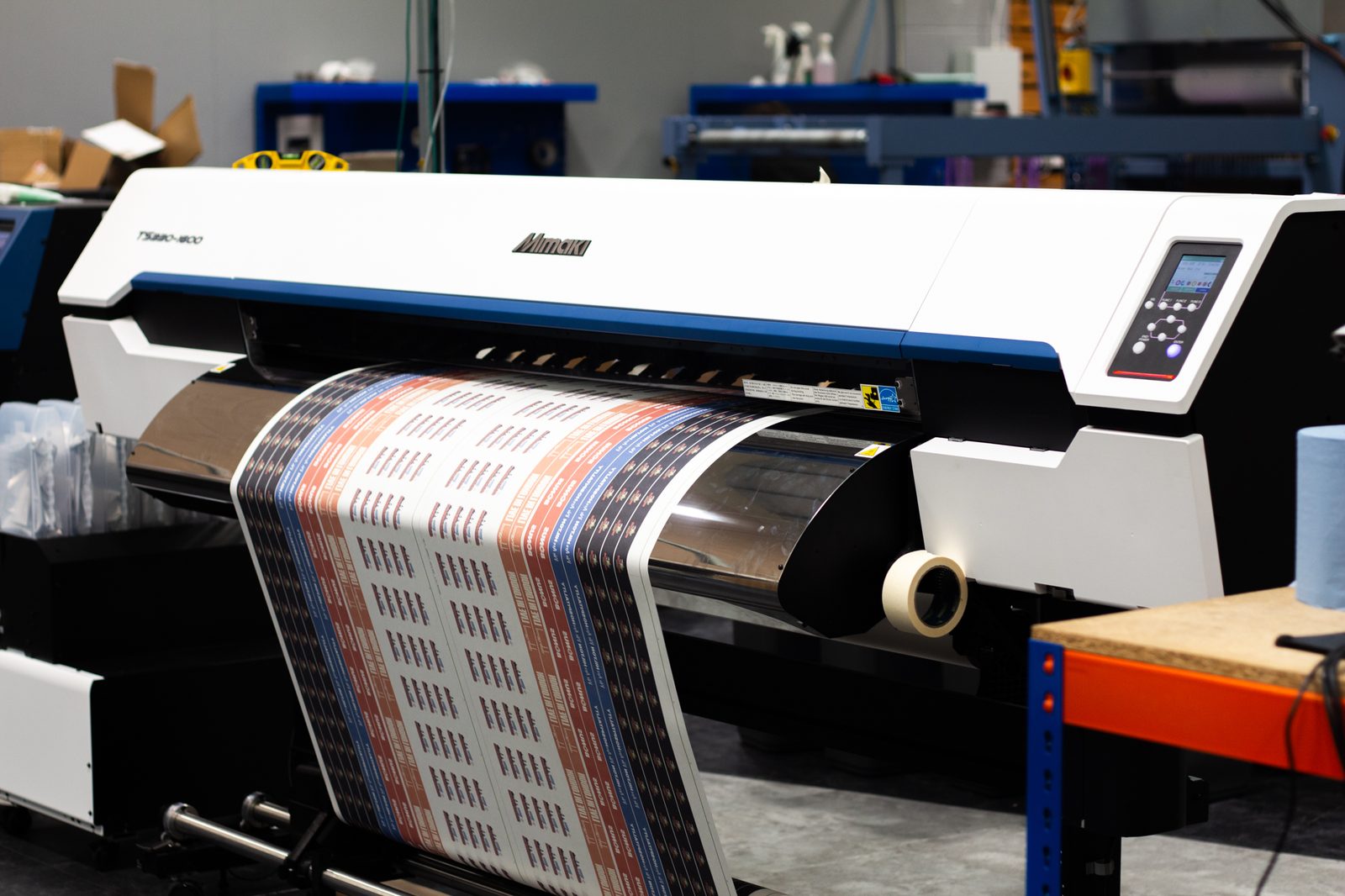 One of our Mimaki wide-format roll-to-roll printers, printing a batch of lanyard designs onto transfer paper.
1. It starts with recycled plastic bottles
Before a lanyard reaches our printing machines, it starts life as something quite different.
The fabric we use for our custom printed lanyards is rPET, a recycled polyester made from post-consumer plastic waste, typically plastic bottles. It's our standard material, rather than an optional upgrade.
The fabric itself is 100% recycled polyester. It's worth making that distinction because the metal clips and plastic safety breakaways aren't made from the same recycled material.
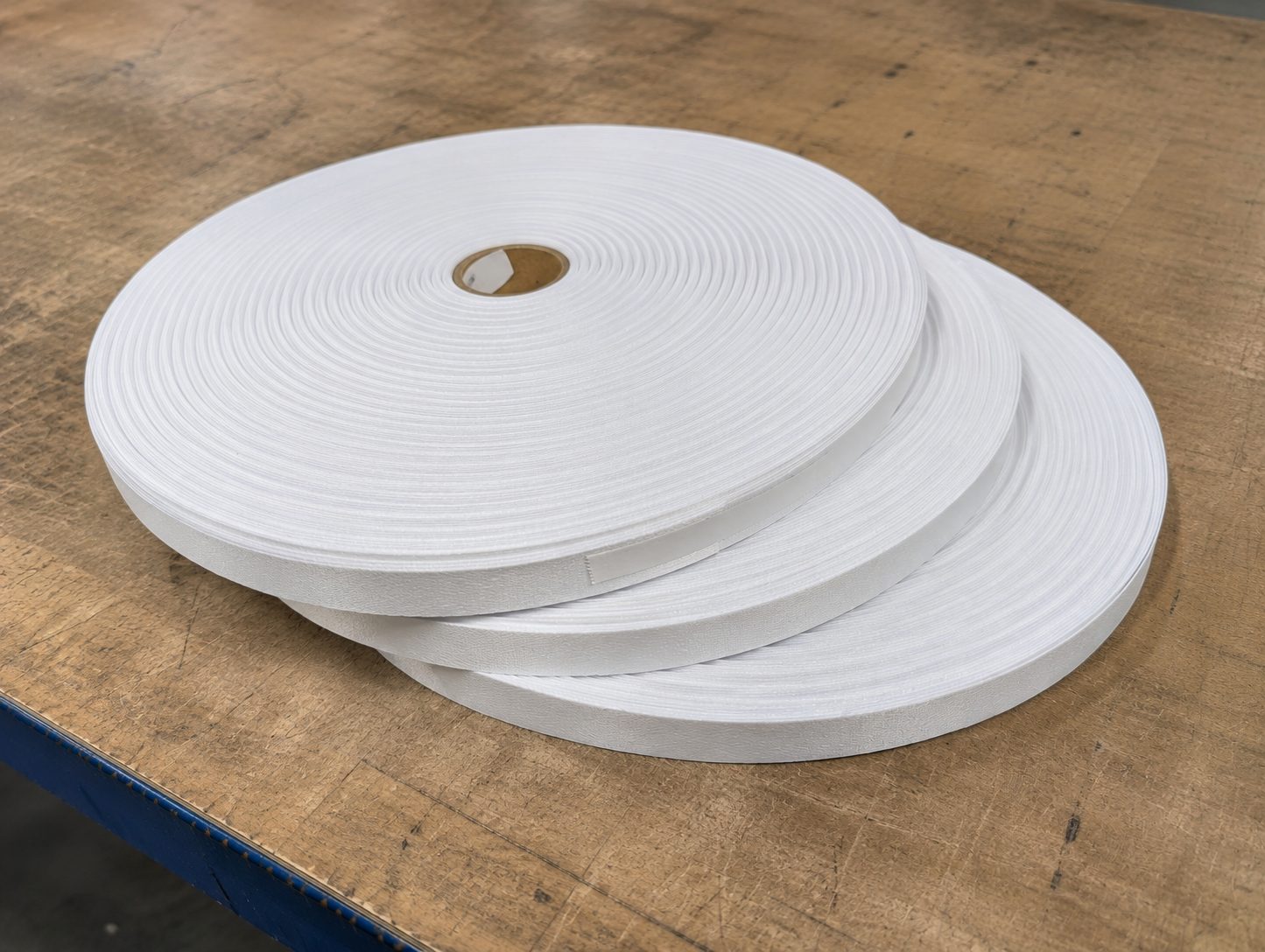 Unprinted white rPET ribbon, supplied on 200-metre rolls.
Our fabric is supplied by a UK distributor and manufactured in China. It's custom made to our exact specifications to ensure the best print finish. It arrives as white ribbon on rolls measuring 200 metres, ready to be printed at our factory.
How many bottles?
To put the amount of material into perspective, our Business Unit Manager has worked through the figures supplied for our fabric.
Based on those calculations, approximately 51 recycled 500ml plastic bottles provide enough material for 1kg of fabric. With the fabric for an individual lanyard weighing around 6.5g, that works out at approximately three lanyards' worth of fabric per bottle.
It's an estimate based on material weight, rather than a claim that every bottle produces exactly three finished lanyards.
The important point is that recycled material is already built into our manufacturing process. Customers don't need to select a different product or pay extra to choose recycled fabric.
2. Getting the materials to Long Eaton
Although our lanyards are manufactured in the UK, some of the raw materials and components come from overseas.
Our fabric is manufactured in China and transported to the UK by sea. We don't use air freight for our raw materials. Shipping generally takes between four and six weeks, so having the materials available at our factory is an important part of keeping production moving.
The clips and breakaways are also manufactured in China by a supplier we work with directly. These components are made to our specifications so they work with our assembly machinery.
The paper used during printing currently comes from Poland.
rPET fabricChinaBy sea, 4 to 6 weeks
Clips and breakawaysChinaMade to our specifications
Transfer paperPolandUsed during printing
When deliveries arrive at our Long Eaton factory, the first job is to get everything unloaded and organised.
Our warehouse team is usually responsible for unloading the incoming pallets. As different materials can arrive mixed together, they sort them into individual stock lines, check and count the contents, then rewrap the pallets.
The materials are stored on pallet racking in our warehouse until they're needed for production.
It's not the most visible part of making a lanyard, but it's where the physical journey through our factory begins.
3. Turning your design into something we can print
While the material is waiting in our warehouse, the other side of the process begins with the customer's design.
Customers can create their lanyards using our online Lanyard Designer, choosing their colours, adding logos or text and selecting the attachments they need.
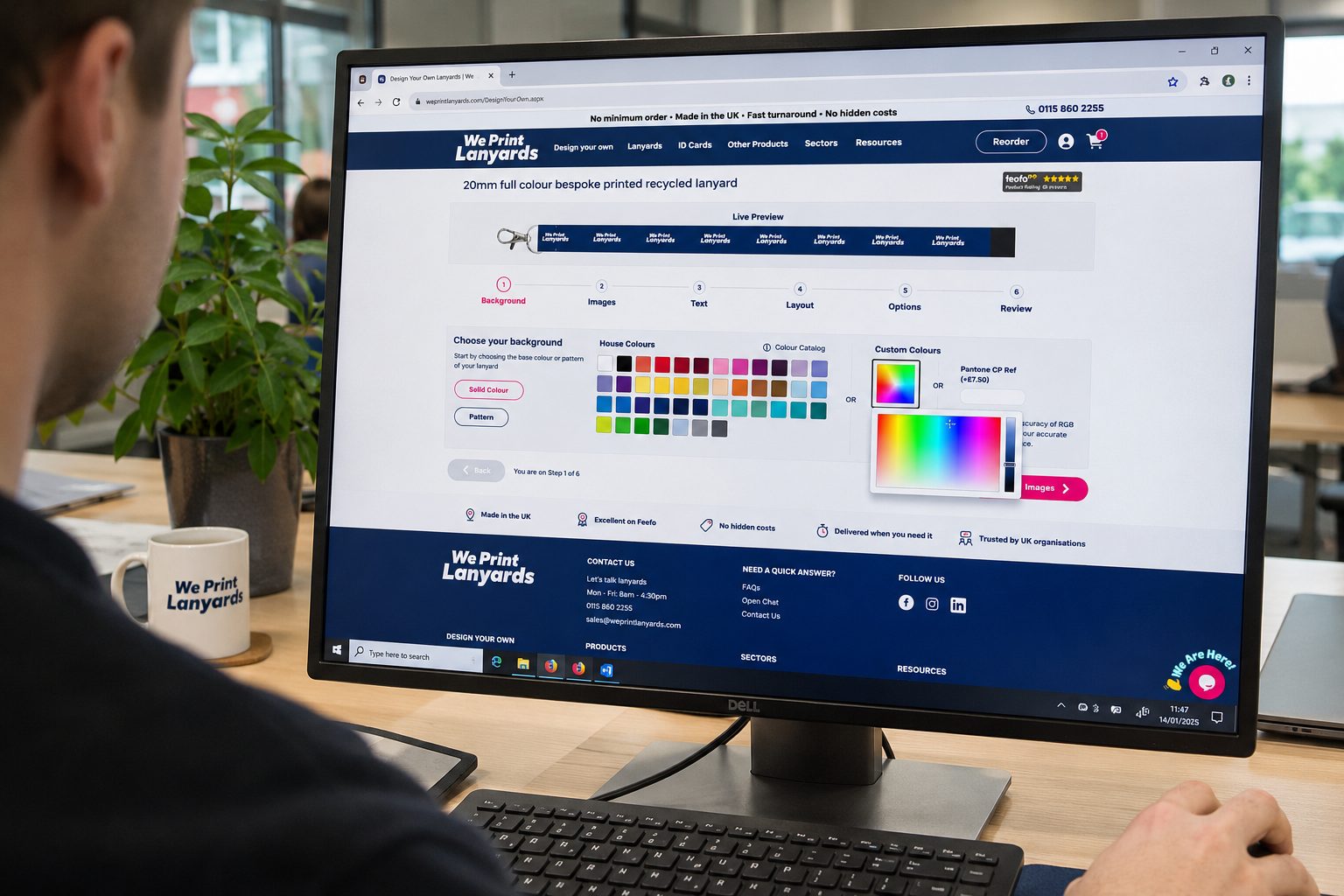 The online Lanyard Designer, where customers choose colours, add logos or text and select attachments.
Once an order is placed, it enters our purpose-built production system. But before anything is printed, our artwork team checks the design.
Our artwork department explained that there's much more to this than simply making sure a logo fits.
The team looks at the colour references provided, the clarity of text, the size and detail of logos, and how the design will repeat along the lanyard. They also check for conflicting instructions, missing information and potential spelling errors.
One issue they regularly encounter is logos with large transparent spaces around them. Although the logo itself might be a reasonable size, that empty space can make it appear much smaller when uploaded into the design.
Very fine lettering, small straplines and designs containing too much text can also be difficult to reproduce clearly on the finished fabric.
Where the team spots something that might cause a problem, they can raise it with the customer rather than simply ignoring it.
What about getting the colours right?
Colour is another important part of preparing artwork.
Customers often supply RGB, HEX or CMYK values, which our artwork team can work with. However, colours displayed on a screen don't always translate exactly into printed fabric.
For customers who need to match an established brand colour, Pantone matching is the best option. A physical colour reference allows the team to work towards a guaranteed or near-exact match, rather than relying solely on how a colour appears on screen.
Once the artwork is prepared, the customer receives a digital proof showing the design and relevant specifications, including colour information, attachments and any comments from the artwork team.
The customer can approve the proof or request amendments. Only once the design has been approved can the order move forward through production.
4. Printing the design onto the lanyard
With the artwork approved, we can move onto the first major manufacturing stage.
Rather than printing every lanyard individually, our production system groups different designs into batches. This allows us to make efficient use of the printing equipment and material.
The number of designs printed alongside one another depends on the width of the lanyard.
For example, a 15mm batch contains 24 streams, while 20mm batches contain 20 and 25mm batches contain 16.
15mm lanyards24 streams
20mm lanyards20 streams
25mm lanyards16 streams
Roll lengthUp to 200mApprox. six hours to print
These batches are sent to our Mimaki wide-format roll-to-roll printers.
The printers use four ink colours, cyan, magenta, yellow and black (CMYK), to reproduce the designs on specially coated sublimation transfer paper.
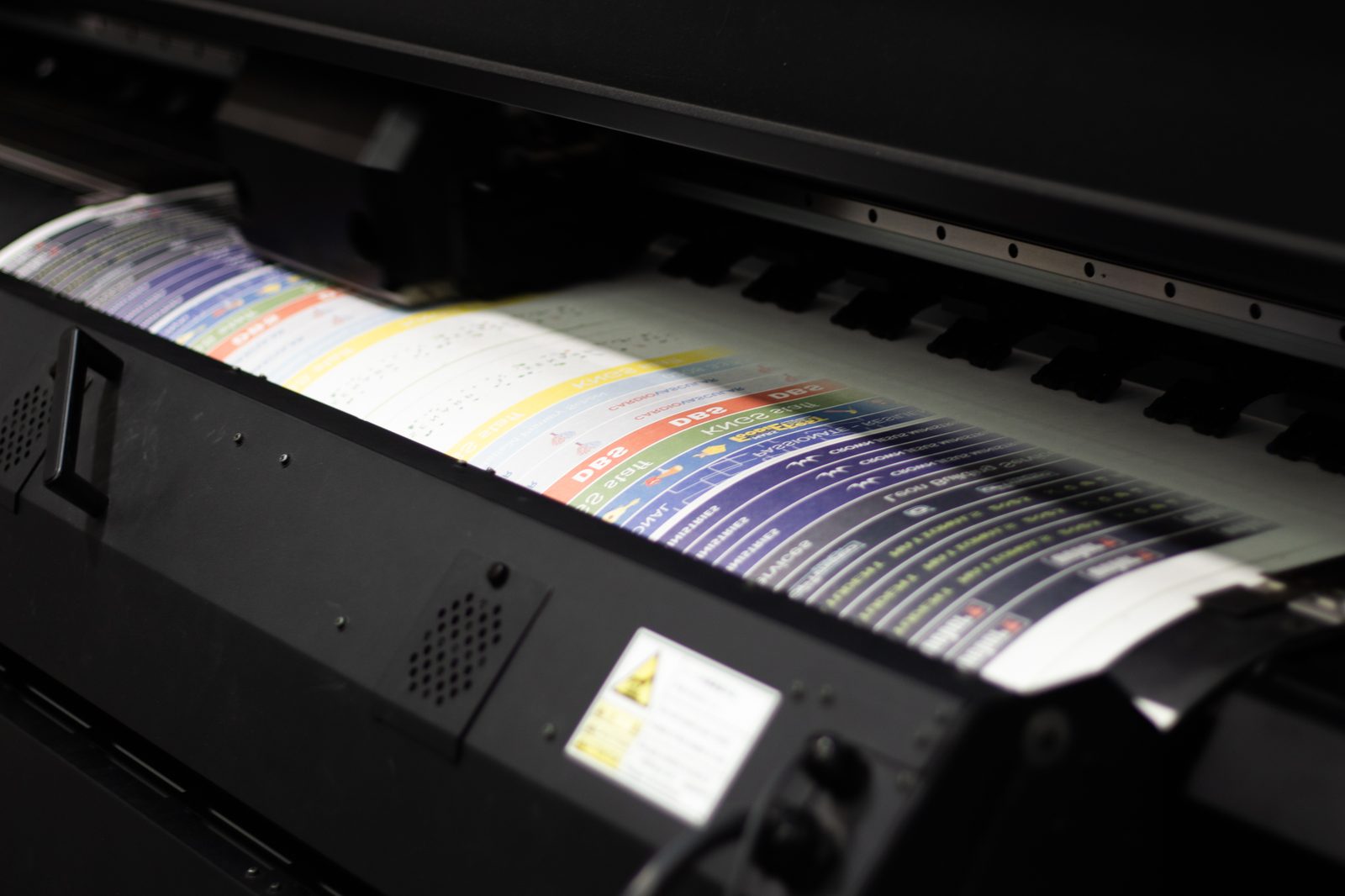 Several lanyard designs printed side by side in one batch on sublimation transfer paper.
A roll can be up to 200 metres long, with the printers taking approximately six hours to print that length.
At this stage, the design is still on paper. The next part of the process is what transfers it onto the fabric.
How does the print get onto the fabric?
Once the transfer paper has been printed, it moves to one of our Transmatic rotary heat presses.
Inside the machine is a heated drum operating at approximately 200°C. The printed paper and white rPET fabric are fed through the press together under heat and pressure.
As the materials pass through, the sublimation ink transfers from the paper into the polyester fibres.
The fabric is sandwiched between printed transfer paper, allowing both sides of the lanyard to be printed at the same time. There's no need to turn the material over and run it through the machine again.
The press operates at around 1.2 metres per minute, giving the design time to transfer onto both sides.
Drum temperatureApprox. 200°C
Press speedAround 1.2m per minute
Sides printedBoth, at the same time
It's at this point that the plain white ribbon becomes the colourful, custom printed fabric customers recognise.
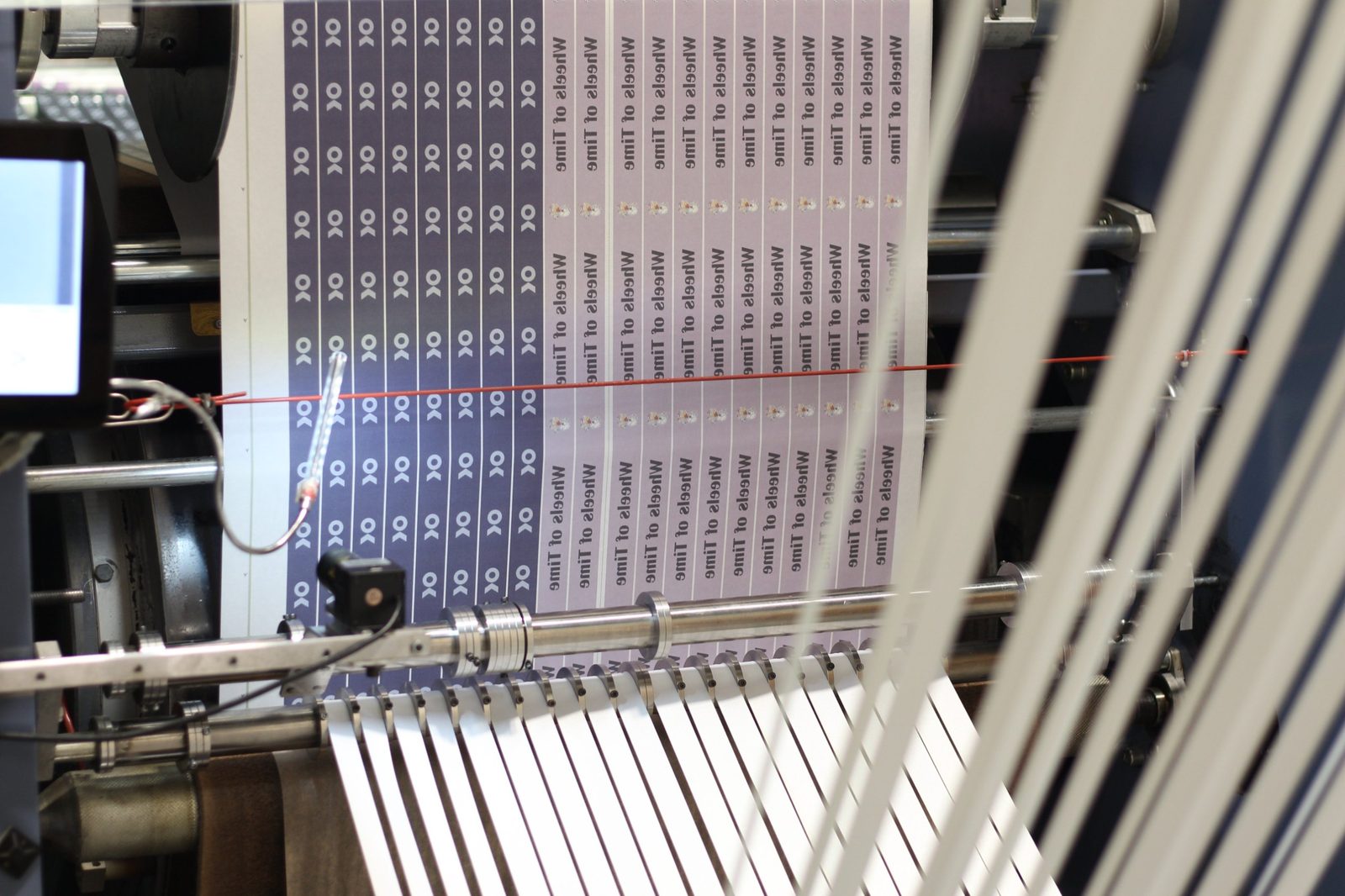 White rPET ribbon and printed transfer paper feeding into a Transmatic heat press.
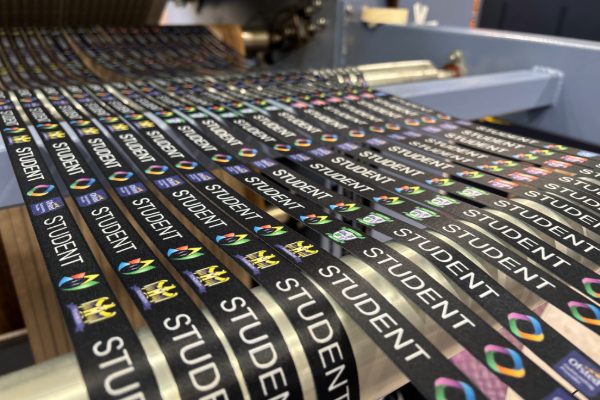 Printed fabric leaving the press, now carrying the customer's design.
The printed material is then collected in tubs, ready to move onto assembly.
Throughout printing, our operators keep an eye out for issues such as misalignment, which can leave white lines along the edges of a lanyard, or head strikes that can create unwanted marks across the design.
Catching these problems during production helps prevent defective material from reaching the next stage.
5. From printed fabric to a finished lanyard
Once the fabric has been printed, it still needs to be cut to length and fitted with the components that make it usable.
This is where some of the most interesting equipment in our factory comes into play.
Our automated lanyard assembly machines have been designed and built in-house by our own engineering team.
Rather than relying on stitching, the machines use ultrasonic technology to cut and bond the material.
Ultrasonic bonding works by applying pressure and high-frequency vibrations to the fabric, generating the heat needed to join the material together.
It's a process that lends itself particularly well to automation. It also means we don't need to use additional adhesives to join the fabric.
Our standard metal trigger clips and single safety breakaways can be fitted by the automated machines as part of the assembly process.
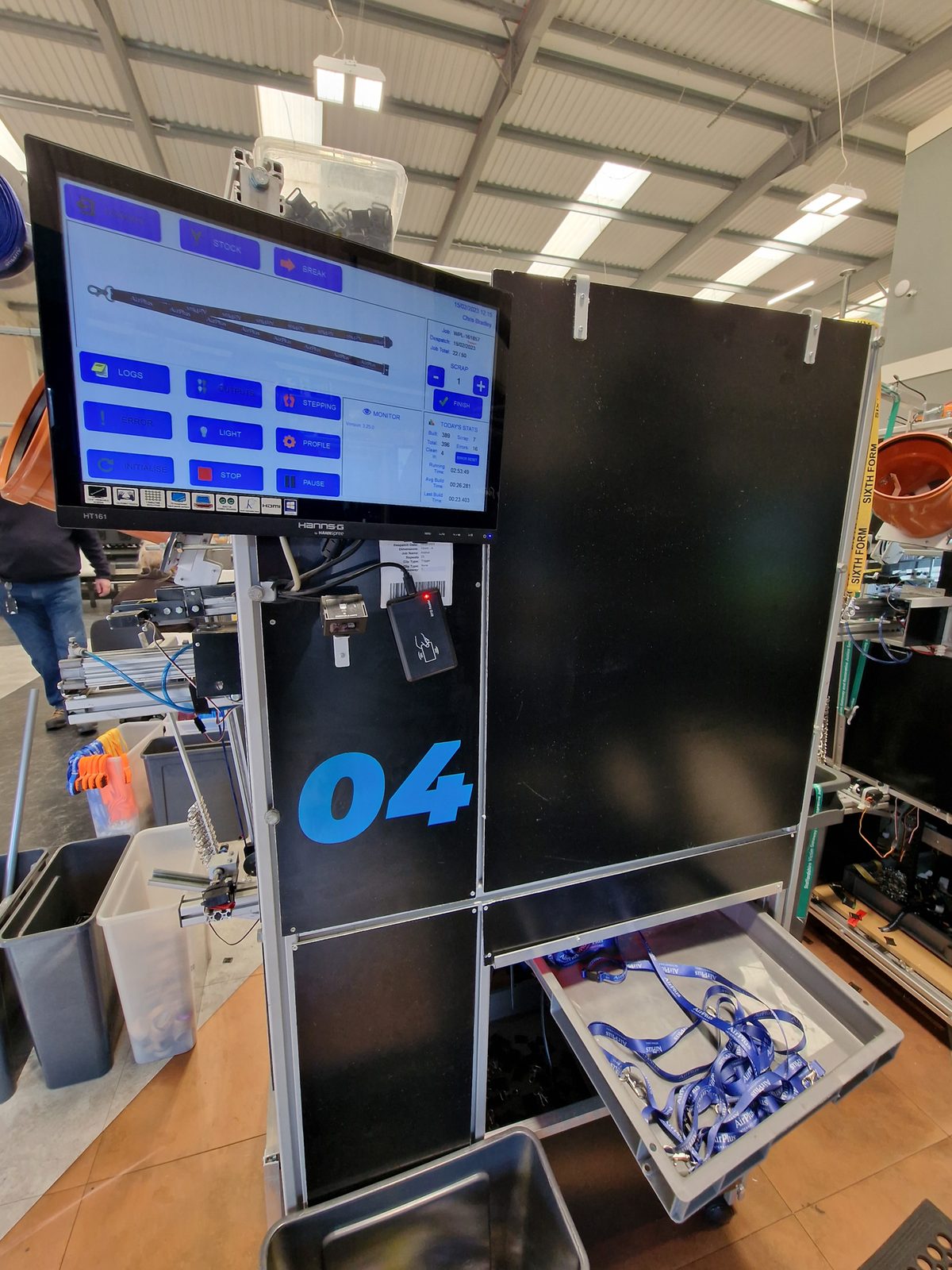 One of our automated assembly machines, designed and built in-house.
Across the different lanyard widths, our typical daily production capacity is around 8,000 lanyards, although the actual mix of products varies depending on the orders being manufactured.
Typical daily capacityAround 8,000Across all lanyard widths
Joining methodUltrasonic bondingNo stitching or adhesives
Assembly machinesBuilt in-houseBy our engineering team
What happens when a lanyard needs something different?
Not every customer needs the same attachments.
Some orders require alternative clips, additional breakaways or other fittings that aren't part of the standard automated setup.
These are handled at our manual ultrasonic workstations.
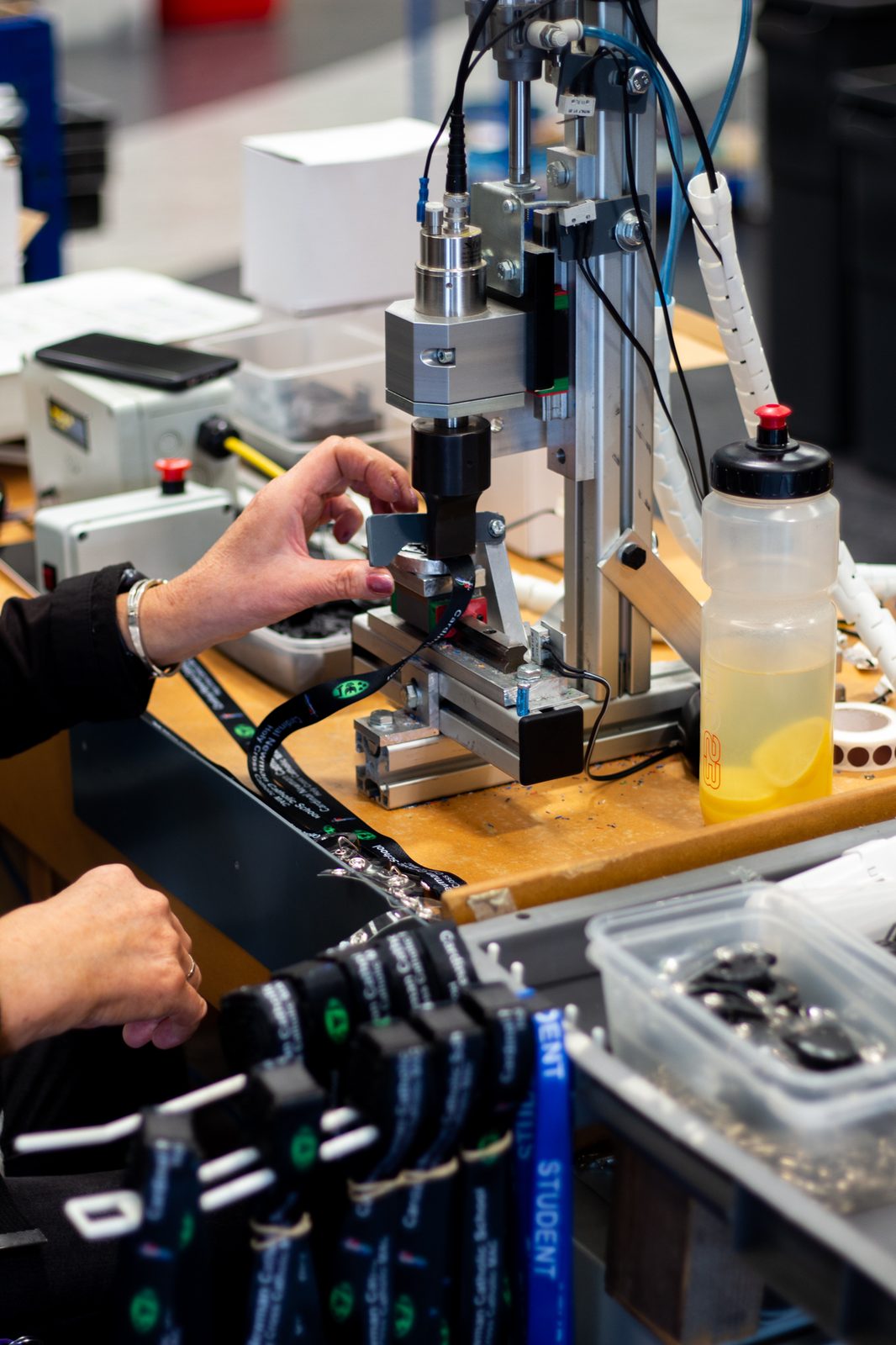 Finishing a lanyard by hand at a manual ultrasonic workstation.
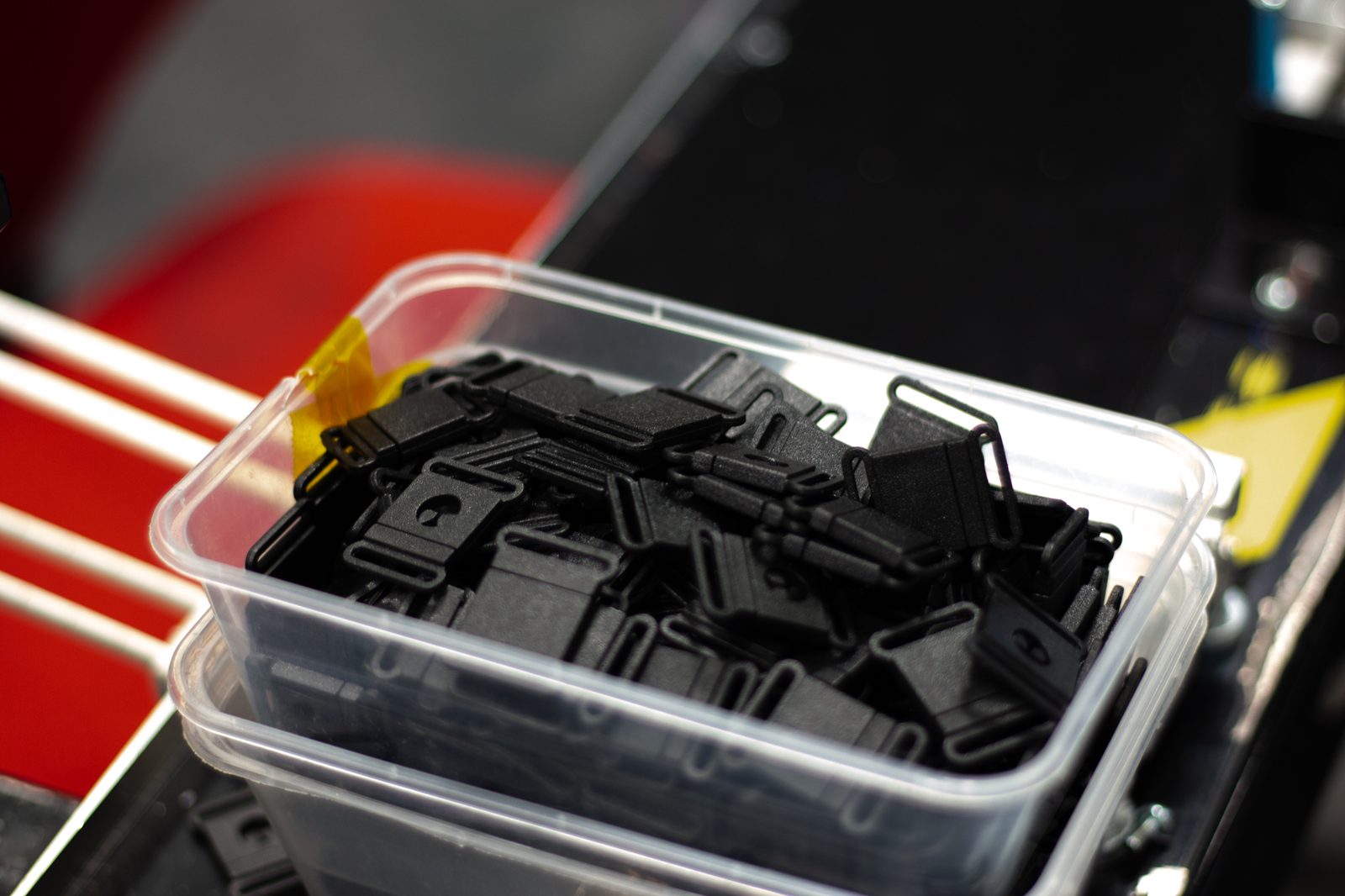 Plastic safety breakaways ready to be fitted.
For certain non-standard attachments, the machine can fit the breakaway before an operator finishes the lanyard by hand. Orders requiring multiple breakaways are assembled manually.
Even at these workstations, the fabric is still joined using ultrasonic bonding rather than stitching.
This combination of automated machinery and manual finishing allows us to manufacture different lanyard configurations within the same factory.
6. Checking the finished lanyards
Before the lanyards can be packed, they need to meet our production standards.
Quality checking isn't something that happens only once at the end of the process. Individual assembly machine operators check their own work as lanyards are produced.
They look at the position and condition of the welds, whether the printed design is centred correctly, and whether there are any visible defects.
Some of the specific things they're checking for include white lines along the fabric, marks caused during printing, incomplete welds and designs that have been cut off or positioned incorrectly.
For designs where the artwork needs to appear in an exact position, the team also checks that the print aligns correctly on both sides.
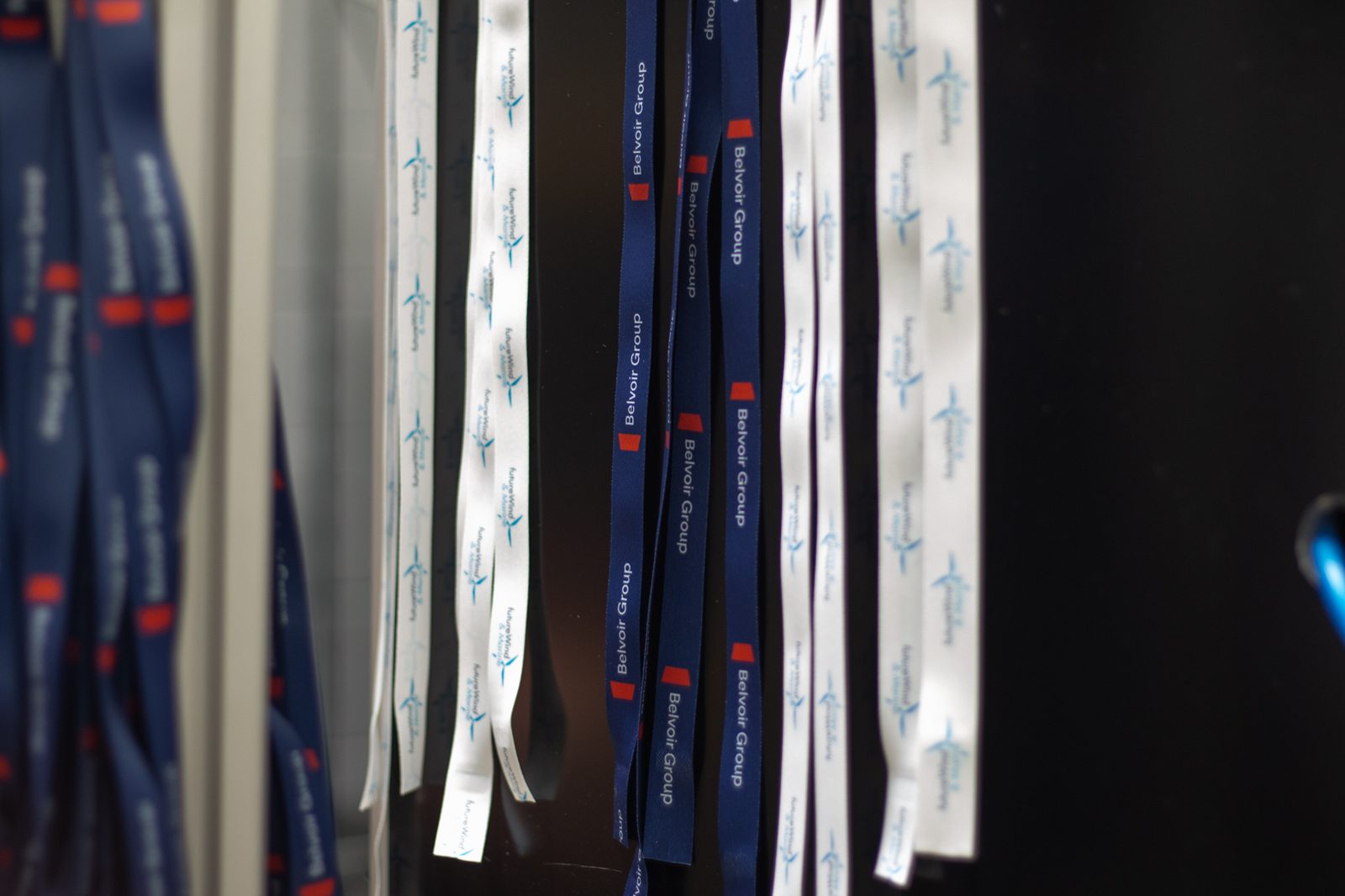 Finished lanyards from different orders, assembled and ready for checking.
Alongside these operator checks, members of our production team carry out additional spot checks every hour.
If a lanyard doesn't meet the required standard, it's removed from the finished order.
The clips are cut off and recovered for reuse, while the rejected polyester material is collected and sent to a polyester recycling facility.
Once the lanyards have passed their checks, they're grouped into quantities of ten and bagged in quantities of 100.
7. Keeping track of every order
With different customer designs moving through production, keeping everything organised is just as important as making the lanyards themselves.
Every design has its own job ticket, which stays with it from printing through to the end of assembly.
The ticket contains information including the order number, quantity, design description and a barcode that can be scanned at the assembly machines.
On every job ticket
- Order number
- Quantity
- Design description
- Barcode, scanned at the assembly machines
This helps the production team track the job as it moves through the factory.
Once a design has been completed, a member of our dispatch team takes the finished lanyards through to the dispatch area.
When preparing an order, they can see which designs belong to it and whether any additional stock products need to be included.
It's a useful final check, particularly for customers ordering several different designs or a combination of customised and stock products.
8. Packed and ready for the journey to you
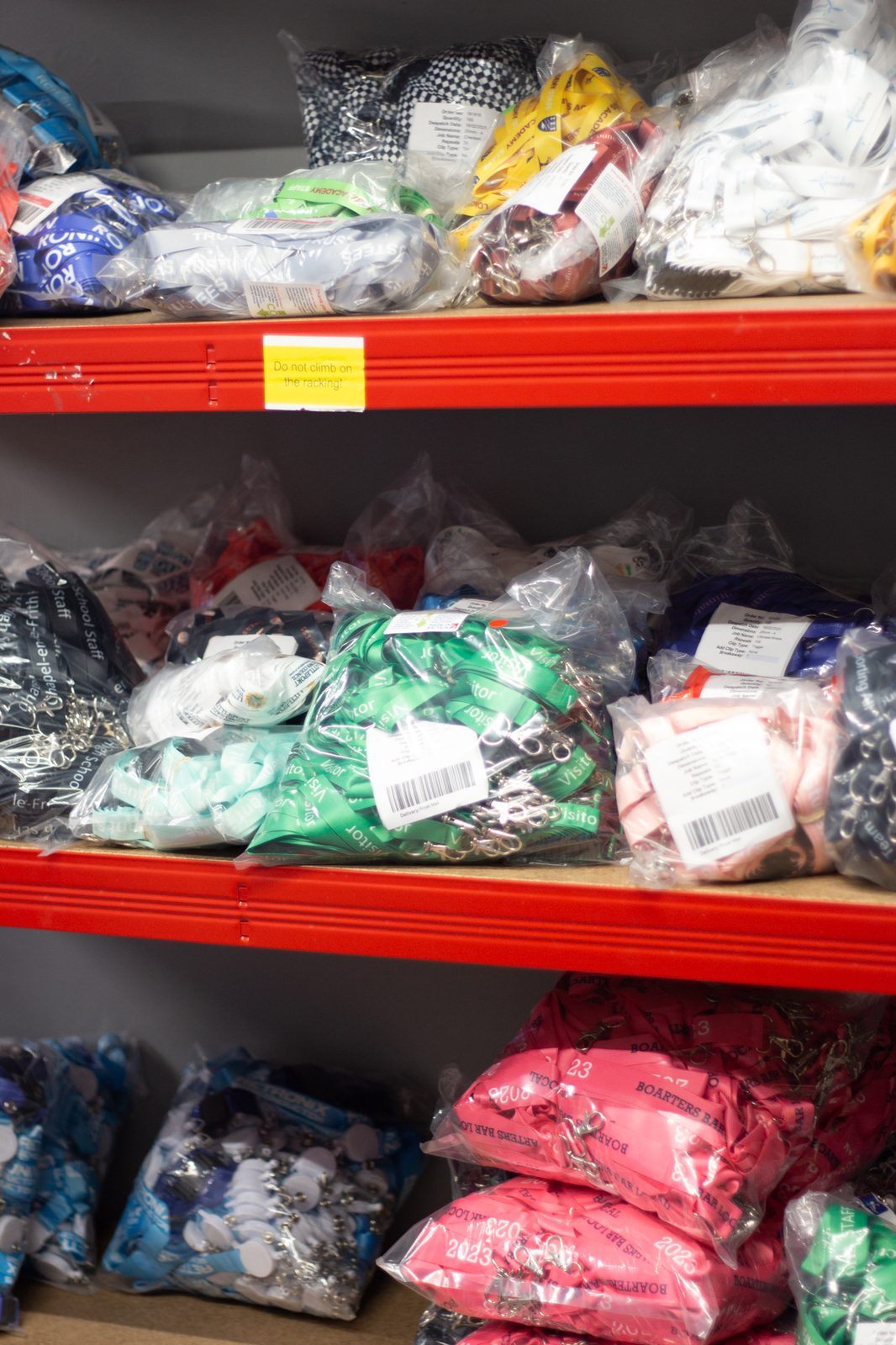 Finished orders, bagged and labelled, waiting in our dispatch area.
The final stage takes place in our dispatch area.
Depending on the size of the order, lanyards may be packed in padded envelopes, mailing bags or cardboard boxes.
We also make use of previously used cardboard boxes wherever suitable. Some are purchased for reuse, while others are boxes we've received with our own materials.
Once everything has been checked and packed, the order is ready to leave the factory.
Orders are generally assembled on their scheduled dispatch day, with Royal Mail and UPS collecting from our premises at around 3:30pm.
Carrier collectionAround 3:30pmRoyal Mail and UPS
PackagingSized to the orderEnvelopes, mailing bags or boxes
Other optionsCollect yourselfOr arrange your own courier
Customers can also arrange to collect their orders themselves or organise their own courier collection.
We offer different production services depending on how quickly an order is needed. The production time begins once the order has been placed and the artwork approved, with the selected production service determining the scheduled dispatch date.
Delivery services and available options are shown during ordering, although delivery dates themselves aren't guaranteed.
And that's the final part of the journey. What began as a roll of white recycled polyester fabric is now a finished, printed lanyard on its way to the customer.
Made in the UK, from start to finish
There's a lot that goes into making a lanyard that most people never get to see.
From our artwork team's checks to the operators monitoring the printing and assembly machines, and our dispatch team preparing the finished orders, every stage involves people who understand their part of the process.
Our factory combines specialist printing equipment, machinery designed by our own engineering team and hands-on quality checks. It's how we turn customer designs into finished products, all under one roof in Long Eaton.
Being able to show that process matters to us. It gives customers a clearer understanding of what they're ordering, where it's made and the work involved in getting it right.
If you're planning an order of custom printed lanyards, you can design your own lanyard online and see how your artwork will look before placing your order.
Frequently asked questions
How are custom printed lanyards made?+
Custom printed lanyards are made by preparing artwork, printing the design onto sublimation transfer paper and using heat and pressure to transfer it onto polyester fabric. The printed material is then cut, bonded and fitted with clips and safety breakaways before being checked, counted and packed.
What material are We Print Lanyards' custom lanyards made from?+
Our custom printed lanyards use 100% recycled polyester (rPET) fabric as standard. The recycled-content claim applies to the fabric rather than the complete product, as the clips and breakaways are separate components.
Are your lanyards printed on both sides?+
Yes. During dye sublimation, the material passes between printed transfer paper so both sides are printed at the same time.
Are lanyards stitched together?+
Our lanyards use ultrasonic bonding rather than conventional stitching. This process joins the fabric using pressure and high-frequency vibrations and is used in both our automated assembly machines and manual finishing stations.
Where are your lanyards manufactured?+
Our custom printed lanyards are manufactured in-house at our factory in Long Eaton, Nottingham, UK. The raw fabric and some components are sourced internationally before being printed and assembled here.
How long does it take to make custom lanyards?+
We offer different production services depending on the order requirements. Production time starts once an order has been placed and its artwork approved. The available options and delivery services can be checked when ordering.
Ready to design your own lanyards?
Create your custom lanyards online and choose the colours, artwork and attachments that suit your organisation.